
Highlights
- Security screens can add a physical barrier to doors and windows.
- The right screen depends on where it will be installed and how it will be used.
- Strong frames and suitable locking systems can support home security.
- Screens can provide security while maintaining ventilation and visibility.
- Regular inspections can help identify damage or wear.
- Professional installation can help create a properly fitted system.
How Can Security Screens Help Protect Your Home?
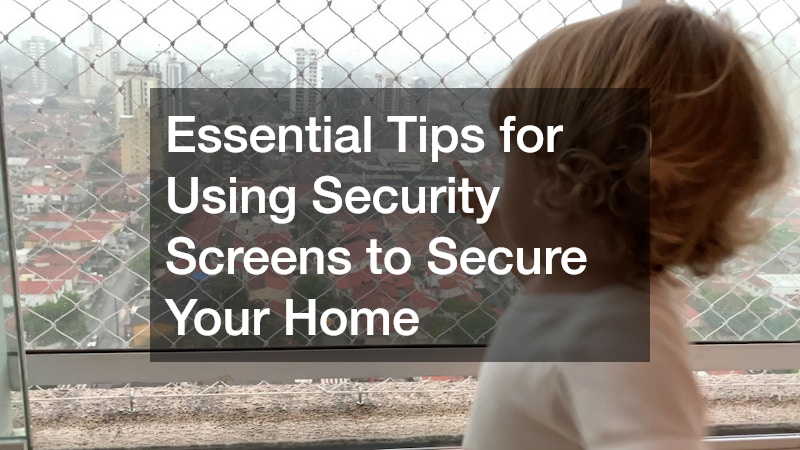
Security screens can provide an additional physical barrier across doors and windows while allowing homeowners to retain ventilation and natural light. Their effectiveness depends on factors including the frame, mesh, locking system, fixings and quality of installation.
Simply adding a screen does not provide the same level of protection in every situation.
According to the Australian Business Licence and Information Service, AS 5039.1:2023 sets classification and performance requirements for security door and window screens. The standard provides performance requirements for security screens and is relevant when assessing the suitability of these products.
Security screens should form part of a wider approach to home security. Quality locks, secure entry points, suitable lighting and sensible household practices can work alongside them.
What Should You Consider When Choosing Security Screens?
The right security screen depends on its location and purpose. A front entry door may require different features from a ground-level window or rear access point. Consider the frame, mesh, hinges and locking system together rather than focusing on one component.
Look for features such as:
- Strong frames: A rigid frame can provide a stable structure around the screen.
- Secure locks: Locking hardware should be appropriate for the opening.
- Durable mesh: The mesh should suit the level of protection required.
- Suitable hinges: Hinges and fixings should be appropriate for the installation.
- Visibility: A suitable design can provide security without unnecessarily restricting views.
- Ventilation: Screens can allow airflow while an opening remains secured.
Choosing features according to the property’s needs can create a more practical result than selecting a screen based purely on appearance.
How Should You Protect Doors & Windows With Security Screens?
Doors and windows are important access points, so security screens can be used strategically where additional protection is needed. Entry doors may benefit from sturdy screens with suitable locking hardware while accessible windows can also be considered.
According to the Australian Institute of Criminology, household security measures recorded in its research included deadlocks, window grilles and window locks. The research demonstrates that homeowners use multiple physical security measures to protect different access points around the property.
This highlights the importance of considering security as a combination of features rather than relying on a single product. Homeowners should consider how each opening is accessed and how existing locks and hardware will work alongside a new screen.
How Can You Maintain Security Screens Over Time?
Regular maintenance can help keep security screens functioning properly. Check frames, mesh, hinges, handles and locks for damage, corrosion, looseness or general wear. Doors should open and close smoothly while locks should engage correctly without excessive force.
Cleaning can also prevent dirt and debris from accumulating around moving parts. Any damaged mesh or compromised frame should be assessed rather than ignored, particularly when the screen protects an important entry point.
Maintenance requirements vary according to the screen’s materials, location and exposure to weather. Following the manufacturer’s care recommendations can help keep the system functioning as intended.
Why is Professional Installation Important?
A security screen needs to be properly fitted to the opening to function as intended. Installation should account for the frame, fixing points, hinges, locks and surrounding structure. Poor fitting can create movement or gaps that affect how the screen operates.
Professional installation can also help homeowners select a design suited to their doors and windows. This can be particularly useful where openings have unusual dimensions or screens need to work with existing security hardware.
The finished installation should remain practical for everyday use. A screen that is difficult to open, close or lock can become inconvenient, while a properly fitted system should provide additional security without making normal access unnecessarily difficult.
How Can Security Screens Become Part of a Wider Security Strategy?
Security screens work best as part of a broader approach to home security. Homeowners can combine them with quality locks, outdoor lighting, secure garage access and sensible habits such as locking doors and windows when they are unattended.
According to NSW Police, perimeter windows should be secured with key-operated locks and doors should have quality deadlock sets. Its residential security guidance also identifies quality metal security grilles or shutters as measures that can restrict unauthorised access.
The goal is to create several layers of protection rather than relying on one feature. When selecting security screens, consider the property’s access points, the required level of protection, the quality of the hardware and the installation method. With suitable products, professional fitting and regular maintenance, security screens can provide a practical additional barrier while supporting the comfort and functionality of the home.
Sources:
- Australian Business Licence and Information Service (ABLiS): https://ablis.business.gov.au/service/wa/australian-standard-as-5039-2008-security-screen-doors-and-security-window-grilles/31563
- Australian Institute of Criminology: https://www.aic.gov.au/sites/default/files/2020-09/CRG-2293-4-FinalReport.pdf
- NSW Police: https://www.police.nsw.gov.